Showing posts with label Tash Aw. Show all posts

Sunday, 17 March 2013

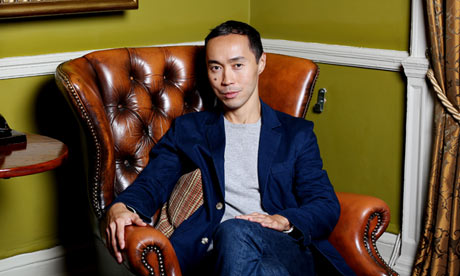
Tash Aw: a life in writing | Maya Jaggi

❝We were distracted because we were all getting richer. I was only a teenager, but I knew something was not right.❞ — Tash Aw [on life in Malaysia in the late 70s and 80s]
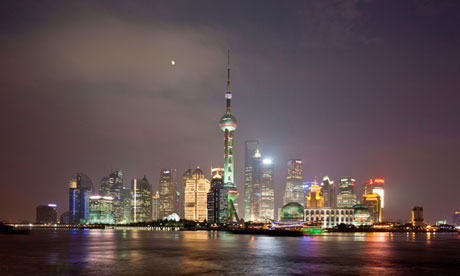
“If the American dream of the 21st century has relocated to China, Shanghai is today's New York. That, at least, is the vibrant impression created by Tash Aw's third novel, set in a frenetic megacity of 20 million people, where fortunes are made and lost with vertiginous speed against the highrise Pudong skyline. "When you're in Shanghai, you feel an energy so blinding that you get swept up," Aw says. "It's only when you leave that it feels unreal."

Five Star Billionaire depicts the Chinese dream in a snakes-and-ladders universe of opportunity and ruin, through the eyes of Chinese Malaysians â from tycoons to factory girls â trying their luck in the new China. For Aw, whose own ancestors made the reverse journey out of southern China to Malaya, and who moved to England as a student in the early 1990s, this novel is about the people he grew up with, and is his "most personal" book.

His 2005 debut, The Harmony Silk Factory, set in 1940s British Malaya on the brink of Japanese invasion, won the Costa (Whitbread) first novel award and a Commonwealth Writers prize. It was on various longlists, including the Man Booker and the International Impac Dublin prize, and has been translated into more than 20 languages. The Indonesian setting of his second novel, Map of the Invisible World, published four years later, marked Aw, now 41, as part of a rising generation of south-east-Asian-born writers who are remapping the region with little heed to existing national frontiers. Aw, who has a kinship with Tan Twan Eng, author of the Booker-shortlisted The Garden of Evening Mists, casts one eye on the past in a place whose full-throttle growth leaves scant time for the backward glance. "I'm not naturally nostalgic for a cosy, bygone era," he says, "but a lot of my work is concerned with what we give up in the march forwards."”

Sunday, 10 March 2013

Five Star Billionaire by Tash Aw – review | Aminatta Forna | The Guardian


“Tash Aw's Five Star Billionaire opens with a bang, not a whimper. Four Malaysians are trying to make it in Shanghai, the new capital of the eastern world – but when we meet them, each of their lives is in freefall. There's Phoebe, the ambitious young Malaysian village girl who passes herself off as Chinese and has arrived in Shanghai on the broken promise of a job and a new life. There's Gary, a "Taiwanese" pop star who finds his fall from grace in a Shanghai bar endlessly replayed on YouTube and is reduced to singing in shopping malls. There's Yinghui, a steely and successful businesswoman whose friends tell her that to really succeed in Shanghai, she needs a man. And, finally, there's Justin, the lonely businessman adopted into a wealthy Malaysian family, who has lost his way while his family have lost their fortune. He and Yinghui knew each other in an earlier life and their reconnection is one of the fine threads that link the characters in this book. Though how many of those threads are held by the fifth character, Walter Chao – the mysterious "I" and author of the bestselling self-help manual Five Star Billionaire – remains to be seen.

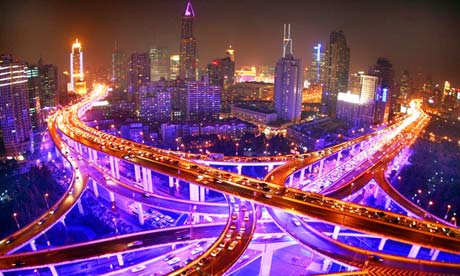
Shanghai values are the values of a new age. Nobody wants to change the world – they only want to get out of it what they can, whatever it takes. With her "good fake" designer bags, stolen ID and forged early life in Guangdong, Phoebe's transformation is the most extreme. Before Gary became a Taiwanese pop star, he was just a poor kid from rural Malaysia with a bullying stepfather. Yinghui's drive masks a shameful family secret and a broken heart that has never quite healed. In Shanghai you can be whoever you want to be.”

Thursday, 7 March 2013

How kari ayam and rice saved Tash Aw in rural Malaysia…


“When I was passing through Bangkok recently, a friend took me to dinner at a fashionable restaurant, nestled at the end of a narrow soi behind a nondescript business hotel. We ate a dazzling array of traditionally prepared, farm-to-table dishes in a room that was painted black and gold; the music was a funky mix of Thai disco from the 1970s. But somewhere between the ginger martinis and the amuse-bouche of shredded river fish infused with rice liquor, I began to feel—as I quite often do in smart restaurants—a longing for one simple dish, as if my palate wasn’t up to the task of discerning the myriad flavours on offer. Then the waiter delivered a bowl of old-fashioned chicken curry, ready to be spooned over a heap of steamed rice. Instantly, I felt grounded.

From the age of six to 16, I spent all my school holidays with my grandparents, who lived on the banks of a great muddy river in the heart of Malaysia. Their village was only 120 miles from Kuala Lumpur, where I grew up, but in the late 1970s and early 1980s, before the construction of the highways that now cut through the jungle, the drive there from the city took more than six hours; it felt as if we were going to another country. Indeed, in some ways, it was a foreign land. I had the ways and appearance of a kid who lived in the capital: Western-style clothes, decent English, a burgeoning interest in computer games. I didn’t speak the same dialect as my cousins and the other children in the village, so we communicated in a weird patois of Malay, English and at least two Chinese dialects, which made me feel hugely dislocated. I didn’t have any of my cousins’ rural skills; I didn’t know how to hunt for catfish or set traps for birds; I hated the bats that lived in the rafters of the timber house. At times, these holidays felt like a prison sentence.”

Wednesday, 6 March 2013

“What are you doing in Malaysia?” See Tshiung Han

Tash Aw, reading an extract from his latest novel, Five Star Billionaire
“The readings usually take place in front of Hamir Soib’s Tak ada beza, a 4-panel painting of pigs walking on their hind legs. This time, the readings took place in another part of Seksan Gallery, in front of a series of mixed-media works by students from Universiti Teknologi MARA. Reading@Seksan’s 9th anniversary was last month, but this month’s event is bigger.

Why? Tash Aw is reading. His first novel, Harmony Silk Factory, won the Whitbread First Novel Award and the Commonwealth Writers’ Prize for Best First Novel. Nobel laureate Doris Lessing said the book is “unputdownable.” He is in Malaysia promoting his new book. He is a Big Deal.

The first reader is Ksatriya. Amir Muhammad introduces him as the “next Cecil Rajendra,” no doubt because of the Penang connection. Ksatriya is based in Gelugor, near George Town, and he organizes an monthly open mic at China House, a restaurant in George Town itself. Like Cecil Rajendra, Ksatriya is a poet.”

Friday, 1 March 2013

Interview: Tash Aw | Charlotte Middlehurst


“Tash Aw is persevering with a bad Skype connection from his flat in Singapore. His pixelated face is rhapsodising about Shanghai, where his latest novel Five Star Billionaire is set. It’s been four years since his last book, which failed to conquer international prize lists despite being tipped for a Nobel. As Malaysia’s only internationally renowned novelist right now, the anticipation surrounding his latest work is palpable. He dodges any talk of expectation, however, preferring to focus on the city instead.

‘There’s something about [Shanghai’s] chaotic energy that I find really exciting,’ he says in a perfect, clipped English accent. ‘I couldn’t wait to come back. For one you can’t walk in KL, Singapore is not easy, Beijing is impossible; and Bangkok, Jakarta are not places you can go for a stroll,’ he says, casually betraying his peripatetic lifestyle.

Released this July, Five Star Billionaire was conceived during Aw’s literary residency at Glamour in 2009. It charts the journeys of five Malaysian migrants who come to Shanghai in search of fame and fortune. Upon arrival they are engulfed by their dizzying new home, yet against the odds their paths converge, forcing a realisation that what they really want may have existed at home all along.”


Five Star Billionaire on this site.

Five Star Billionaire: Tash Aw on the human cost of China’s growth | Metro (UK)

«Novelist Tash Aw asks what price China is paying as it races to the top of
the world’s economic league table (Picture: Danny Allison) »
 
“China is racing to the top of the economic pile but, asks Tash Aw in his new novel, Five Star Billionaire, at what human cost?”

“Damaging though the social effects of rampant capitalism and breakneck urbanisation were in Europe back in the Victorian age, they did fuel perhaps the greatest literature of the day in providing the backdrop to the novels of Dickens and Zola. Now the focus of capital and commerce has shifted to south-east Asia, and nowhere has been more emblematic of the boom that has transformed China over the past two decades than Shanghai.

With its skyscrapers festooning along the horizon, it is the setting for Tash Aw’s novel of the baleful and alienating effects of the bright lights of the big city. There is a definite sense within its pages of a sprawling society of extremes to echo those 19th-century authors.”

Thursday, 28 February 2013

Book Review – Five Star Billionaire by Tash Aw | Isabel Costello

“I’m struggling to think of more than two books I’ve read set in China and I suspect they’re the same two everyone else has read: Wild Swans (1991) by Jung Chang and Memoirs of a Geisha (1997) by Arthur Golden, both historical masterpieces, international bestsellers and published a good while ago.  So much about China has changed since then including global perceptions – it’s opened up considerably and far more Westerners have travelled there, but to me it was still a huge and incomprehensible place I knew very little about.   Last autumn I jumped at the chance to read an advance copy of Five Star Billionaire precisely because it’s contemporary and forward-looking.  Its bluntly unromantic portrayal of life in Shanghai taps into an unprecedented level of interest, curiosity and even fear of what China is and will become – I didn’t hesitate to include it in my Fiction Hot Picks 2013.

Tash Aw’s literary credentials are impressive and likely to be further enhanced by the release of this high-profile third novel.  No doubt his cosmopolitan background has played a part:  born in Taipei, China, to Malaysian parents he was brought up in Malaysia, moved to England to study law at Cambridge and now lives in London.  The Harmony Silk Factory (2005) won The Whitbread First Novel Award, the Commonwealth Prize for First Novel and was longlisted for the Man Booker Prize that year.  A second novel, Map of the Invisible World followed in 2010.

Five Star Billionaire charts the fate of five economic migrants of Chinese Malaysian origin as they pursue their ambitions in Shanghai (already the world’s largest city with a population of ca. 23 million and predicted to reach 30 million by 2020).  Phoebe is young, naive and materialistic, hooked on self-help books one of which is the Five Star Billionaire of the title.  Gary is a popstar who has fatally tarnished his image at the height of his fame.  Yinghui is a businesswoman who has sacrificed a lot to get where she is; Walter is a bigshot entrepreneur who’s not what he seems and Justin is a property magnate whose professional and personal life are in ruins.”

Tuesday, 26 February 2013

Five Star Billionaire by Tash Aw – review | Adam Mars-Jones | The Guardian

Tash Aw's tale of five migrant workers carving out lives in a modernising Shanghai is the stuff of a hit TV miniseries


“Shanghai, a city ‘with a heart as deep and unknown
as the forests of the Amazon’.” Photograph: Alamy
“At one point in Tash Aw's fine new novel about what people call "the new China" a young woman is trying to photograph herself on her mobile phone in a park in Guangzhou, hoping to enliven her internet dating profile with an image that doesn't make her look like an immigrant factory worker (which she is). An old man who sells tickets for the rowing boats on the lake offers to take the picture for her. He looks uncertainly at her phone. She wonders if he understands how to work it. Then he says: "This phone is so old. My grandson had one just like this three years ago when he was still in middle school." This is the world of the book, where traditional societies seem to have leapfrogged their way into a modernity without signposts, where the past isn't solid enough to build on but too substantial to be ignored.

The five main characters, three men and two women, all come to Shanghai (by some definitions the world's largest city) from Malaysia, though their backgrounds range from old money to rural deprivation. As a title, Five Star Billionaire is close to brash, and the book's storyline could persuasively be pitched to a producer in search of a blockbuster miniseries, but the reading experience it offers is coolly engrossing – with elements of frustrating evasion – rather than propulsive. Tash Aw doesn't exactly kill plot momentum or the emotional impact of the situations he creates, but he certainly keeps them in check. Narrative hints are often indirect, like clues in a detective story, as when a passing reference to a character having written an article deploring the architecture of Gaudí suggests that a conversation almost a hundred pages earlier wasn't in fact spontaneous.

It's possible to reach the book's final stretch without being sure that this is a story of revenge. If it is, then revenge is being eaten very cold indeed, from the chiller cabinet if not the freezer.”

Review: Five Star Billionaire, By Tash Aw: The loneliness of five long-distance foreigners | The Independent

Shanghai Skyline
Shanghai Skyline (Photo credit: Keith Marshall)
“If the authorities in Shanghai ever want to ask a prize-winning writer to pen poetic phrases to attract visitors and investors to China's (and the world's) largest city, they would do best not to call Tash Aw. For this, his third novel, paints a dark picture of an endless metropolis to which many come to seek their fortunes but instead risk losing, or at the least deadening, their souls.

Like his first novel, The Harmony Silk Factory (which won the Whitbread First Novel Award in 2005) and his second, Map of the Invisible World, Five Star Billionaire is connected to Malaysia, where Aw grew up. And he is unmatched at evoking the smells and sounds of the land and cityscapes, the figures of speech and shifting cultural mores of that finger-like peninsula that pokes into the South China Sea; a warm, wonderful land, but one where many fortunes were made too quickly and which discarded much of its history carelessly in the rush to develop.”

Tuesday, 18 December 2012

NTU hosts award-winning novelist Tash Aw as international writer-in-residence

“Acclaimed novelist Tash Aw will be the National Arts Council/Nanyang Technological University (NTU) international writer-in-residence at NTU starting on 10 January 2013.

Cover of "The Harmony Silk Factory"
Cover of The Harmony Silk Factory
Mr Aw is the author of three novels, which have been translated into 23 languages. The multi-award-winning Malaysian writer is one of Southeast Asia's most respected literary figures.

Published in 2005, Mr Aw's first novel, The Harmony Silk Factory, was long-listed for the renowned Man Booker Prize (2005) and won the prestigious 2005 Whitbread Book Awards First Novel Award as well as the 2005 Commonwealth Writers Prize for Best First Novel (Asia Pacific region). The novel was also long-listed for the prestigious International Impac Dublin Award (2007) and the Guardian First Book Prize. His second novel, Map of the Invisible World, was published in May 2009, also to critical acclaim. A third novel, Five Star Billionaire, is scheduled to be published in March 2013.”

Read more…