Showing posts with label Malaysian fiction. Show all posts

Monday, 18 March 2013

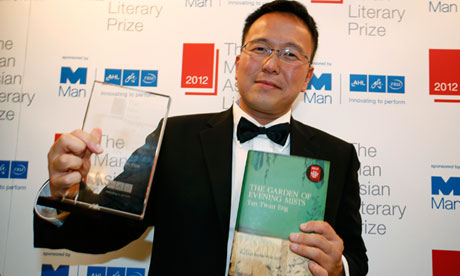
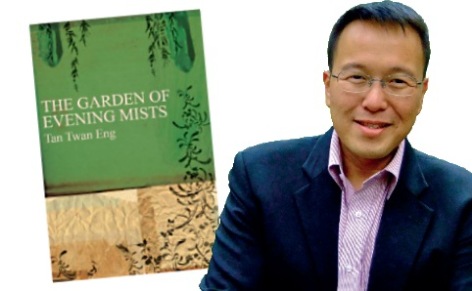
An audience with Tan Twan Eng, winner of this year's Man Asian Literary Prize | Kate Whitehead


“Tan Twan Eng knows all there is to know about Japanese gardens, can tell you all about Boer war postmarks, and he's even something of an expert on tattoos. It all went into his second novel, The Garden of the Evening Mists, which last week won the prestigious Man Asian Literary Prize. Not that the Malaysian lawyer turned author has much of a green thumb. In fact, he admits to having absolutely no interest in gardening. "One of the reasons it took so long to write the book was because I was very reluctant to write about gardening. I kept trying to think of ways to circumvent it."

But there was no way around it - the garden is central to the novel. It's a character in its own right, he says. And all the time he was trying to avoid writing about it, gardens were seeping into his life. "My friends in Cape Town constantly talk about their gardens or some flower, or they go to the west coast because the flowers are in bloom and you can see fields of them. So listening to them, I suppose I was influenced."

What was a KL city boy doing in Cape Town? It all started in 2004 when he decided to take what he calls a "gap year". But it was anything but a year of lolling around. He was an intellectual property specialist in a prestigious law firm but he was losing interest in the law and wanted an excuse to get away for a little while. His exit ticket was a master's degree at Cape Town University.”

Sunday, 17 March 2013

What's Next for Man Asian Winner Tan Twan Eng? (Video)

“Malaysian author Tan Twan Eng was awarded the 2012 Man Asian Literary Prize for his novel 'The Garden of Evening Mists.' He spoke earlier with the WSJ's Brittany Hite about the book, set during the aftermath of the Japanese occupation of Malaya, and what he is planning next.”

From: The Wall Street Journal


Articles on Tan Twan Eng on this site

Tash Aw: a life in writing | Maya Jaggi

❝We were distracted because we were all getting richer. I was only a teenager, but I knew something was not right.❞ — Tash Aw [on life in Malaysia in the late 70s and 80s]
“If the American dream of the 21st century has relocated to China, Shanghai is today's New York. That, at least, is the vibrant impression created by Tash Aw's third novel, set in a frenetic megacity of 20 million people, where fortunes are made and lost with vertiginous speed against the highrise Pudong skyline. "When you're in Shanghai, you feel an energy so blinding that you get swept up," Aw says. "It's only when you leave that it feels unreal."

Five Star Billionaire depicts the Chinese dream in a snakes-and-ladders universe of opportunity and ruin, through the eyes of Chinese Malaysians â from tycoons to factory girls â trying their luck in the new China. For Aw, whose own ancestors made the reverse journey out of southern China to Malaya, and who moved to England as a student in the early 1990s, this novel is about the people he grew up with, and is his "most personal" book.

His 2005 debut, The Harmony Silk Factory, set in 1940s British Malaya on the brink of Japanese invasion, won the Costa (Whitbread) first novel award and a Commonwealth Writers prize. It was on various longlists, including the Man Booker and the International Impac Dublin prize, and has been translated into more than 20 languages. The Indonesian setting of his second novel, Map of the Invisible World, published four years later, marked Aw, now 41, as part of a rising generation of south-east-Asian-born writers who are remapping the region with little heed to existing national frontiers. Aw, who has a kinship with Tan Twan Eng, author of the Booker-shortlisted The Garden of Evening Mists, casts one eye on the past in a place whose full-throttle growth leaves scant time for the backward glance. "I'm not naturally nostalgic for a cosy, bygone era," he says, "but a lot of my work is concerned with what we give up in the march forwards."”

Friday, 15 March 2013

Tan Twan Eng wins Man Asian prize | The Guardian


“The Malaysian novelist Tan Twan Eng has won the 2012 Man Asian prize with his novel, The Garden of Evening Mists.

His novel, which was shortlisted for last year's Booker prize, was hailed by the chair of judges Maya Jaggi for its "stylistic poise and probing intelligence".

"Taking its aesthetic cues from the artful deceptions of Japanese landscape gardening," she said, "it opens up a startling perspective on converging histories, using the feints and twists of fiction to explore its themes of personal and national honour; love and atonement; memory and forgetting; and the disturbing co-existence of cultural refinement and barbarism."”

Sunday, 10 March 2013

Five Star Billionaire by Tash Aw – review | Aminatta Forna | The Guardian


“Tash Aw's Five Star Billionaire opens with a bang, not a whimper. Four Malaysians are trying to make it in Shanghai, the new capital of the eastern world – but when we meet them, each of their lives is in freefall. There's Phoebe, the ambitious young Malaysian village girl who passes herself off as Chinese and has arrived in Shanghai on the broken promise of a job and a new life. There's Gary, a "Taiwanese" pop star who finds his fall from grace in a Shanghai bar endlessly replayed on YouTube and is reduced to singing in shopping malls. There's Yinghui, a steely and successful businesswoman whose friends tell her that to really succeed in Shanghai, she needs a man. And, finally, there's Justin, the lonely businessman adopted into a wealthy Malaysian family, who has lost his way while his family have lost their fortune. He and Yinghui knew each other in an earlier life and their reconnection is one of the fine threads that link the characters in this book. Though how many of those threads are held by the fifth character, Walter Chao – the mysterious "I" and author of the bestselling self-help manual Five Star Billionaire – remains to be seen.

Shanghai values are the values of a new age. Nobody wants to change the world – they only want to get out of it what they can, whatever it takes. With her "good fake" designer bags, stolen ID and forged early life in Guangdong, Phoebe's transformation is the most extreme. Before Gary became a Taiwanese pop star, he was just a poor kid from rural Malaysia with a bullying stepfather. Yinghui's drive masks a shameful family secret and a broken heart that has never quite healed. In Shanghai you can be whoever you want to be.”

Wednesday, 6 March 2013

Malaysian science fiction and fantasy in English | Zen Cho


“Following a Twitter exchange I drew up a list of all the Malaysian SFF writers in English I knew of. Rochita Loenen-Ruiz and Joyce Ch’ng asked me to post it, so here it is. It is by no means comprehensive, and I welcome suggestions for additions.

Also, super a lot of links, so give me a shout if any of them are broken ya.”

Friday, 1 March 2013

Interview: Tash Aw | Charlotte Middlehurst


“Tash Aw is persevering with a bad Skype connection from his flat in Singapore. His pixelated face is rhapsodising about Shanghai, where his latest novel Five Star Billionaire is set. It’s been four years since his last book, which failed to conquer international prize lists despite being tipped for a Nobel. As Malaysia’s only internationally renowned novelist right now, the anticipation surrounding his latest work is palpable. He dodges any talk of expectation, however, preferring to focus on the city instead.

‘There’s something about [Shanghai’s] chaotic energy that I find really exciting,’ he says in a perfect, clipped English accent. ‘I couldn’t wait to come back. For one you can’t walk in KL, Singapore is not easy, Beijing is impossible; and Bangkok, Jakarta are not places you can go for a stroll,’ he says, casually betraying his peripatetic lifestyle.

Released this July, Five Star Billionaire was conceived during Aw’s literary residency at Glamour in 2009. It charts the journeys of five Malaysian migrants who come to Shanghai in search of fame and fortune. Upon arrival they are engulfed by their dizzying new home, yet against the odds their paths converge, forcing a realisation that what they really want may have existed at home all along.”


Five Star Billionaire on this site.

Five Star Billionaire: Tash Aw on the human cost of China’s growth | Metro (UK)

«Novelist Tash Aw asks what price China is paying as it races to the top of
the world’s economic league table (Picture: Danny Allison) »
 
“China is racing to the top of the economic pile but, asks Tash Aw in his new novel, Five Star Billionaire, at what human cost?”

“Damaging though the social effects of rampant capitalism and breakneck urbanisation were in Europe back in the Victorian age, they did fuel perhaps the greatest literature of the day in providing the backdrop to the novels of Dickens and Zola. Now the focus of capital and commerce has shifted to south-east Asia, and nowhere has been more emblematic of the boom that has transformed China over the past two decades than Shanghai.

With its skyscrapers festooning along the horizon, it is the setting for Tash Aw’s novel of the baleful and alienating effects of the bright lights of the big city. There is a definite sense within its pages of a sprawling society of extremes to echo those 19th-century authors.”

Thursday, 28 February 2013

Book Review – Five Star Billionaire by Tash Aw | Isabel Costello

“I’m struggling to think of more than two books I’ve read set in China and I suspect they’re the same two everyone else has read: Wild Swans (1991) by Jung Chang and Memoirs of a Geisha (1997) by Arthur Golden, both historical masterpieces, international bestsellers and published a good while ago.  So much about China has changed since then including global perceptions – it’s opened up considerably and far more Westerners have travelled there, but to me it was still a huge and incomprehensible place I knew very little about.   Last autumn I jumped at the chance to read an advance copy of Five Star Billionaire precisely because it’s contemporary and forward-looking.  Its bluntly unromantic portrayal of life in Shanghai taps into an unprecedented level of interest, curiosity and even fear of what China is and will become – I didn’t hesitate to include it in my Fiction Hot Picks 2013.

Tash Aw’s literary credentials are impressive and likely to be further enhanced by the release of this high-profile third novel.  No doubt his cosmopolitan background has played a part:  born in Taipei, China, to Malaysian parents he was brought up in Malaysia, moved to England to study law at Cambridge and now lives in London.  The Harmony Silk Factory (2005) won The Whitbread First Novel Award, the Commonwealth Prize for First Novel and was longlisted for the Man Booker Prize that year.  A second novel, Map of the Invisible World followed in 2010.

Five Star Billionaire charts the fate of five economic migrants of Chinese Malaysian origin as they pursue their ambitions in Shanghai (already the world’s largest city with a population of ca. 23 million and predicted to reach 30 million by 2020).  Phoebe is young, naive and materialistic, hooked on self-help books one of which is the Five Star Billionaire of the title.  Gary is a popstar who has fatally tarnished his image at the height of his fame.  Yinghui is a businesswoman who has sacrificed a lot to get where she is; Walter is a bigshot entrepreneur who’s not what he seems and Justin is a property magnate whose professional and personal life are in ruins.”

Tuesday, 26 February 2013

Five Star Billionaire by Tash Aw – review | Adam Mars-Jones | The Guardian

Tash Aw's tale of five migrant workers carving out lives in a modernising Shanghai is the stuff of a hit TV miniseries


“Shanghai, a city ‘with a heart as deep and unknown
as the forests of the Amazon’.” Photograph: Alamy
“At one point in Tash Aw's fine new novel about what people call "the new China" a young woman is trying to photograph herself on her mobile phone in a park in Guangzhou, hoping to enliven her internet dating profile with an image that doesn't make her look like an immigrant factory worker (which she is). An old man who sells tickets for the rowing boats on the lake offers to take the picture for her. He looks uncertainly at her phone. She wonders if he understands how to work it. Then he says: "This phone is so old. My grandson had one just like this three years ago when he was still in middle school." This is the world of the book, where traditional societies seem to have leapfrogged their way into a modernity without signposts, where the past isn't solid enough to build on but too substantial to be ignored.

The five main characters, three men and two women, all come to Shanghai (by some definitions the world's largest city) from Malaysia, though their backgrounds range from old money to rural deprivation. As a title, Five Star Billionaire is close to brash, and the book's storyline could persuasively be pitched to a producer in search of a blockbuster miniseries, but the reading experience it offers is coolly engrossing – with elements of frustrating evasion – rather than propulsive. Tash Aw doesn't exactly kill plot momentum or the emotional impact of the situations he creates, but he certainly keeps them in check. Narrative hints are often indirect, like clues in a detective story, as when a passing reference to a character having written an article deploring the architecture of Gaudí suggests that a conversation almost a hundred pages earlier wasn't in fact spontaneous.

It's possible to reach the book's final stretch without being sure that this is a story of revenge. If it is, then revenge is being eaten very cold indeed, from the chiller cabinet if not the freezer.”

Review: Five Star Billionaire, By Tash Aw: The loneliness of five long-distance foreigners | The Independent

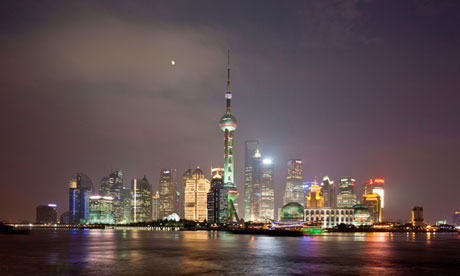
Shanghai Skyline
Shanghai Skyline (Photo credit: Keith Marshall)
“If the authorities in Shanghai ever want to ask a prize-winning writer to pen poetic phrases to attract visitors and investors to China's (and the world's) largest city, they would do best not to call Tash Aw. For this, his third novel, paints a dark picture of an endless metropolis to which many come to seek their fortunes but instead risk losing, or at the least deadening, their souls.

Like his first novel, The Harmony Silk Factory (which won the Whitbread First Novel Award in 2005) and his second, Map of the Invisible WorldFive Star Billionaire is connected to Malaysia, where Aw grew up. And he is unmatched at evoking the smells and sounds of the land and cityscapes, the figures of speech and shifting cultural mores of that finger-like peninsula that pokes into the South China Sea; a warm, wonderful land, but one where many fortunes were made too quickly and which discarded much of its history carelessly in the rush to develop.”

Saturday, 9 February 2013

Leeds Book Club: Interview with Tan Twan Eng

Both your books deal with the relationships between students and teachers. Have you had an inspirational teacher and what was the greatest lesson they taught you?

My teachers are all the writers I’ve ever read and still read: Vladimir Nabokov, Kazuo Ishiguro, Rushdie, Julian Barnes, Somerset Maugham, and many, many others. They taught me the different ways one can view and describe the world.

I felt when reading your books very ignorant about the part of the world you come from; do you feel that your books are helping to educate people around the world about the history of Malaysia? What sort of responses have you had from Western readers and how do they compare with readers in your country?

They seem to be helping to educate people around the world, although that isn’t my main purpose or intention when I write. Western readers have more questions about all aspects of my novels, from the setting and factual background to the characters. Readers in Malaysia are more interested in the characters than anything else, because they’re already familiar with the setting of my novels.

Tuesday, 8 January 2013

The Gift of Rain - Tan Twan Eng «conclusion» | Kathleen Price

❝Moments in time when the world is changing bring out the best and the worst in people.❞ *

Tan Twan Eng's debut novel A Gift of Rain continues to receive the attention it deserves.

“…what I am perhaps the most impressed with is the story’s dealing with race. Japan’s involvement in World War 2 is always something that fascinated me, but at the same time not something I wholly wanted to investigate. From many British soldiers accounts, it was one of the harshest regimes, and even peers of mine in Hong Kong told stories about Japanese culture both then and now like they were fireside stories for camp, sadly making Bridget Jones’ mother’s opinion of the Japanese being a ‘cruel race’ a far more popular opinion than I would like. Naturally then, it makes the topic a hard one to tackle and open up to a Western audience. What the Gift of Rain does is bring a sensitive perspective in showing the lives all citizens in Malaya of all races, Philip experiencing this hostility even before the war due to his mixed race- very close to what I have witnessed over recent years. Tan explores how the practical survival instinct to choose a side is near impossible when opened up to enough humanity, and how what is truly crucial is to hang onto the characteristics that you choose for yourself.

Overall, I would say that it needs a little faith and patience to get off its feet, but once in flight it becomes a story you’re unlikely to forget.”

Read more… 

*This quotation (above) from The Gift of Rain has become a “quotable quote.” It was quoted, for example, by the IMF Chief, Christine Lagarde in her speech in Kuala Lumpur on the 14th of November 2012.

Monday, 7 January 2013

Review of The Garden of Evening Mists in The Herald, Scotland «conclusion»

“The themes of Twan Eng's novel are memory and colonialism, a superficially neat connection which asks not only what do we remember, but what should we remember, and how? The truth is always messier, though. Yun Ling's friend Magnus is a veteran of the Boer uprisings against the British; the hills behind Kuala Lumpur bear the name of their British colonialist invaders. Interestingly, the atomic bombs dropped on Hiroshima and Nagasaki are only mentioned in one line – this book, written by a Malaysian, has Yun Ling ask about Japanese reparation for the pain and suffering it caused other nations. She does not want to remember the pain and suffering any Japanese subsequently experienced.

In that sense, this is a weighted political novel, but that's where its passion comes from. Yun Ling is possibly too restrained at times, Aritomo too shadowy, but both have serious secrets to hide. In a violent world, perhaps restraint is the best we can manage; in a horribly compromised life, reparation is never quite enough, and is itself full of contradictions. Twan Eng's novel is a commendably grown-up tale that doesn't give easy concessions”

Thursday, 3 January 2013

Two reviews of Tan's The Garden of Evening Mists


In Me, You, and Books:


“An exquisite novel flowing around a mysterious Japanese garden in the highlands of Malaysia and narrated by a Chinese woman scarred by her experiences in a Japanese concentration camp during World War II. Shortlisted for the Man Booker Prize 2012.

Tan is a superb writer able to create a multi-layered novel involving the stories of diverse characters and spanning three time periods. He has woven the stories told by his varied characters into a flowing mediation on gardening, memory, illusion and loss. The narrator is Yun Ling, a Malaysian women of Chinese descent. In the most recent layer of the story, health threats cause her to retire her judgeship and return to the plantation and Japanese garden in the Malaysian highlands where she had lived for a time thirty years before. Once there, she begins collecting her own memories. Many of them deal with the earlier time when she had lived at the tea plantation of friends and worked with the Japanese gardener, Aritomo, the former gardener of the Emperor of Japan. Although still bitter toward the Japanese, Ling had agreed to be his apprentice in order to create a garden honoring her sister who died when they were both imprisoned in a Japanese concentration camp. As Yun Ling had labored in the garden, she had calmed and healed. Her relationship with the mysterious Aritomo had deepened in surprising ways. She dug more deeply into the past and told of her own scarring experiences in the camp”


In Counterpunch «conclusion»:

“I’ve circled around much of the story, identifying the surface realities of Tan Twan Eng’s enchanting novel, short-listed for this year’s Man Booker Award. There are mysteries to be uncovered here, elegantly woven into a story of great beauty and formality, whether they are the Japanese gardens (the Art of Setting Stones and the Deception of Borrowed Scenery) or the equally detailed references to tea ceremonies and, to a lesser extent, tea cultivation. Even tattooing, as it relates to ritual, class, and artistry becomes important as Aritomo’s secret past slowly unfolds for Teoh Yun Ling (as well as the reader). The Garden of Evening Mists levitates above the surface reality of war and its terrible atrocities and floats, hauntingly, like a Japanese lantern up into the sky.”


Monday, 31 December 2012

My favourite books of 2012 | Saturday Sundries | editorialeyes

Tan Twan Eng's Garden of Evening Mists features in a few “best/favourite books/novels of 2012” lists. Here is one of them.

“The Garden of Evening Mists, by Tan Twan Eng

Perhaps my favourite book of 2012, this multilayered narrative is as much about memory and storytelling as it is about tea gardens, tattooing, Zen practice, and the horrors of war. Judge Teoh retires from the bench because she has a rare brain disease, and she returns to the tea estates of her youth, where she once went healed as best she could from the loss of her sister and her time in a Japanese prisoner-of-war camp. She wants to share the story of the Japanese gardener who helped in that healing, ad as she does, secrets from the war of her own life come into focus.”

Monday, 24 December 2012

The Power of a Garden | Stefanie Hollmichel

“Back in September I think it was, Grad told me I had to read The Garden of Evening Mists by Tan Twan Eng. When someone tells me to read a book I don’t usually hurry off to get a copy, but Grad got me to read Sea of Poppies by Amitav Ghosh so I decided to trust her on this one. She must have emailed a good many other people in Minneapolis to tell them to read it too because the book had a waiting list. Finally my turn came up and I am happy to say that Grad is two for two!

It is such a complex, intricate and beautiful book. The story takes place in the Cameron Highlands of Malaya during the Malayan Emergency. But the story is not about the Emergency though it is always in the background and sometimes breaks into the forefront. What the story is about is Yun Ling Teoh.

When the Japanese occupied Malaya during World War II, she and her sister were imprisoned in a work camp. Yun Ling and her family are Straits Chinese, ethnic Chinese from the British Straits Settlements of Malaya. Yun Ling’s sister was forced to serve as a comfort woman to the Japanese officers in the camp. Yun Ling, several years younger, was forced, first to work in digging what the prisoners thought was a mine. But Yun Ling was smart and resourceful. She made friends with the Dutch chaplain and asked him to teach her Japanese which then allowed her to serve as a translator for her Japanese captors and work in the camp kitchen where she could take food for herself and sneak some to her sister sometimes. When it was clear the Japanese were losing the war, the prison camp and all the Malayan prisoners were killed. All but Yun Ling who escaped with the help of a high ranking Japanese official. After the war, Yun Ling served on the government to help track down Japanese war criminals and those who aided them. In the process, she was also searching for the location of the camp she and her sister were at but no one had ever heard of it.”

Wednesday, 19 December 2012

The Garden of Evening Mists - Tan Twan Eng | Therapy Through Tolstoy

The Garden of Evening Mists is such a beautifully written story of strength, courage, and the passing of time. It is the second novel by Tan Twan Eng to be nominated for the Man Booker Prize: his first novel, The Gift of Rain, was published in 2007 and long-listed for the award that year. This year, The Garden of Evening Mists was published, and short-listed. Perhaps his next novel will win!

Goodreads provides the following plot overview: 
It's Malaya, 1949. After studying law at Cambridge and time spent helping to prosecute Japanese war criminals, Yun Ling Teoh, herself the scarred lone survivor of a brutal Japanese wartime camp, seeks solace among the jungle-fringed plantations of Northern Malaya where she grew up as a child. There she discovers Yugiri, the only Japanese garden in Malaya, and its owner and creator, the enigmatic Aritomo, exiled former gardener of the Emperor of Japan. Despite her hatred of the Japanese, Yun Ling seeks to engage Aritomo to create a garden in Kuala Lumpur, in memory of her sister who died in the camp. Aritomo refuses, but agrees to accept Yun Ling as his apprentice 'until the monsoon comes'. Then she can design a garden for herself. As the months pass, Yun Ling finds herself intimately drawn to her sensei and his art while, outside the garden, the threat of murder and kidnapping from the guerrillas of the jungle hinterland increases with each passing day. But the Garden of Evening Mists is also a place of mystery. Who is Aritomo and how did he come to leave Japan? Why is it that Yun Ling's friend and host Magnus Praetorius, seems to almost immune from the depredations of the Communists? What is the legend of 'Yamashita's Gold' and does it have any basis in fact? And is the real story of how Yun Ling managed to survive the war perhaps the darkest secret of all? 
It's a fascinating plot, and I always love reading narratives that demonstrate a character overcoming mental, and physical, challenges. A few years ago I wrote a literature essay on catharsis in The House of the Spirits by Isabel Allende and Atwood's The Handmaid's Tale, and it would be interesting to consider these two novels alongside Tan Twan Eng's sometime.

Tuesday, 18 December 2012

The Garden of Evening Mists by Tan Twan Eng | Book Addict

“This is Tan Twang Eng’s second novel and his first, The Gift of Rain (2007) enchanted me with its poetic language and beautiful imagery. The Garden of Evening Mists gave me the same pleasure and obviously others, as it was shortlisted for the Man Booker Prize this year.

The main character is an elderly woman called Yun Ling Teoh, who returns to the tea plantations of the Cameron Highlands to a house and garden that she has inherited. Yun Ling Teo has aphasia, a neurological condition which is causing her memory to fade, and she writes her memories down in order to not forget her past.

And so the readers learn of her as a younger woman who comes to the Cameron Highlands to visit ‘Yugiri’, the only Japanese garden in Malaysia. Both Yun Ling Teoh and her sisters were held under appalling conditions in a Japanese prisoner-of-war camp, during which time her sister died. Yun Ling Teoh went to Yugiri to honour her sister’s wish to create a Japanese garden. There she meets the reclusive Arimoto, former gardener to the Emperor of Japan, and the creator of Yugiri.”

Read more…

NTU hosts award-winning novelist Tash Aw as international writer-in-residence

“Acclaimed novelist Tash Aw will be the National Arts Council/Nanyang Technological University (NTU) international writer-in-residence at NTU starting on 10 January 2013.

Cover of "The Harmony Silk Factory"
Cover of The Harmony Silk Factory
Mr Aw is the author of three novels, which have been translated into 23 languages. The multi-award-winning Malaysian writer is one of Southeast Asia's most respected literary figures.

Published in 2005, Mr Aw's first novel, The Harmony Silk Factory, was long-listed for the renowned Man Booker Prize (2005) and won the prestigious 2005 Whitbread Book Awards First Novel Award as well as the 2005 Commonwealth Writers Prize for Best First Novel (Asia Pacific region). The novel was also long-listed for the prestigious International Impac Dublin Award (2007) and the Guardian First Book Prize. His second novel, Map of the Invisible World, was published in May 2009, also to critical acclaim. A third novel, Five Star Billionaire, is scheduled to be published in March 2013.”

Read more…